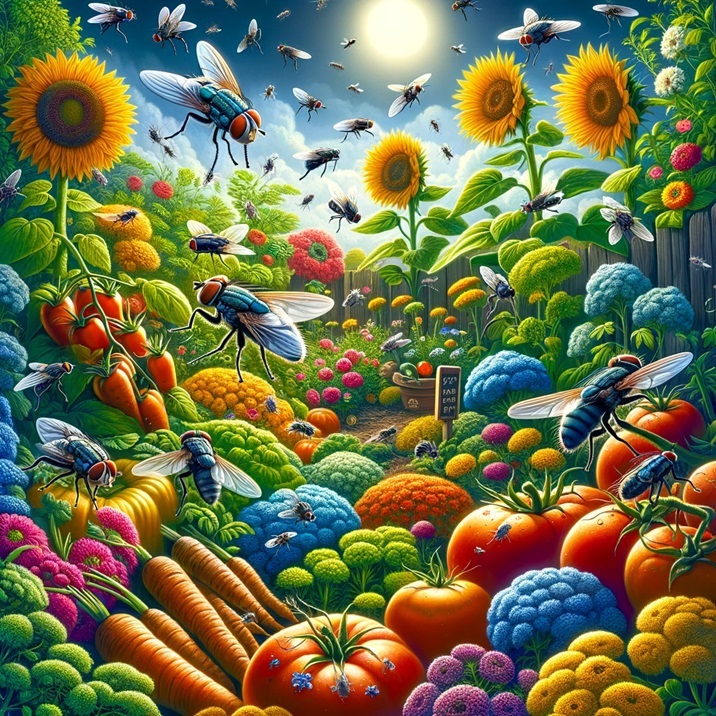
It whirls its way back just far enough to pick up momentum and throw itself against the window . . . again . . . futilely smashing it’s black body into the pane. I’ll need to kill it, I know. Or maybe I’ll just try to guide it to the door and send it flying into the backyard, disappearing toward the chicken run where it might or might not be eaten by one of the seven sisters.
I hate killing anything. Sure, when you have 10 houseflies buzzing around the sunroom it’s not that hard to muster the internal coldness that it takes to snag the racket-shaped zapper and go to town. But one . . . well it just seems better to give it a chance.
The aforementioned fly found its way out the door before we even got up from dinner. Good. But as I sat there, twirling my healthy serving of pasta with pesto chicken, it occurred to me that the filthy little pests must serve some purpose on this Earth beyond taking out our minor aggressions and food fodder for chicken and frogs.
So I asked my buddy, ChatGPT what it thought:
- Pollination: Like many insects, houseflies contribute to the pollination of certain plants. While they are not as effective as bees, they still help with the pollination process, especially in urban and degraded environments where other pollinators might be scarce.
- Decomposition: Houseflies play a role in the decomposition of organic matter. Their larvae, commonly known as maggots, break down decomposing flesh and vegetation, which helps recycle nutrients back into the ecosystem.
- Food Source: Houseflies and their larvae serve as a significant food source for a variety of animals, including birds, reptiles, amphibians, and other insects. This makes them an important part of the food chain.
- Scientific Research: Houseflies have also been useful in scientific research due to their rapid life cycle and genetic simplicity. They have been used to study disease transmission, genetics, and the effects of radiation, among other areas.
- Waste Management: In some cases, the larvae of houseflies are used in waste management to help break down organic waste, reducing overall waste volume and converting it into usable byproducts like animal feed.
Wow. I wasn’t expecting pollination, but it totally makes sense. That’s a big one for us, and not just because our last name means ‘Beekeeper’ in German. I got some great advice from my cousin Anne on why my lavender bushes keep dying, and so I’m pretty psyched to try that again.

My dad told a story about when he was a barber in Ann Arbor and an old, African American man came into the shop and the stench was unbearable. They did not immediately kick him out, as many would have. They noticed his leg squirming. Upon getting a closer look, they found dozens of maggots feasting on an open wound in the man’s leg. They called the police, who called and ambulance, and whisked the man off to the hospital. Before leaving, the paramedics told my dad and his partner that the two of them, coupled with the maggots, had saved that man’s life.
I pray his life took a turn for the better after that.
Rereading this, it sounds as if I’m going soft. Nah. I really do enjoy zapping bunches of flies so it’s not like I’m that compassionate. Maybe my care only extends to those left on their own. I suppose that goes for just about any of God’s creatures.
There are people and most likely animals who/that prefer to be — and are better off — alone. But for the most part, they are solitary because something has gone wrong.
In Catholic grade school, we were all once gathered in the gym to watch a movie on St./Mother Teresa (celluloid, of course, no such thing as DVDs in 1973).
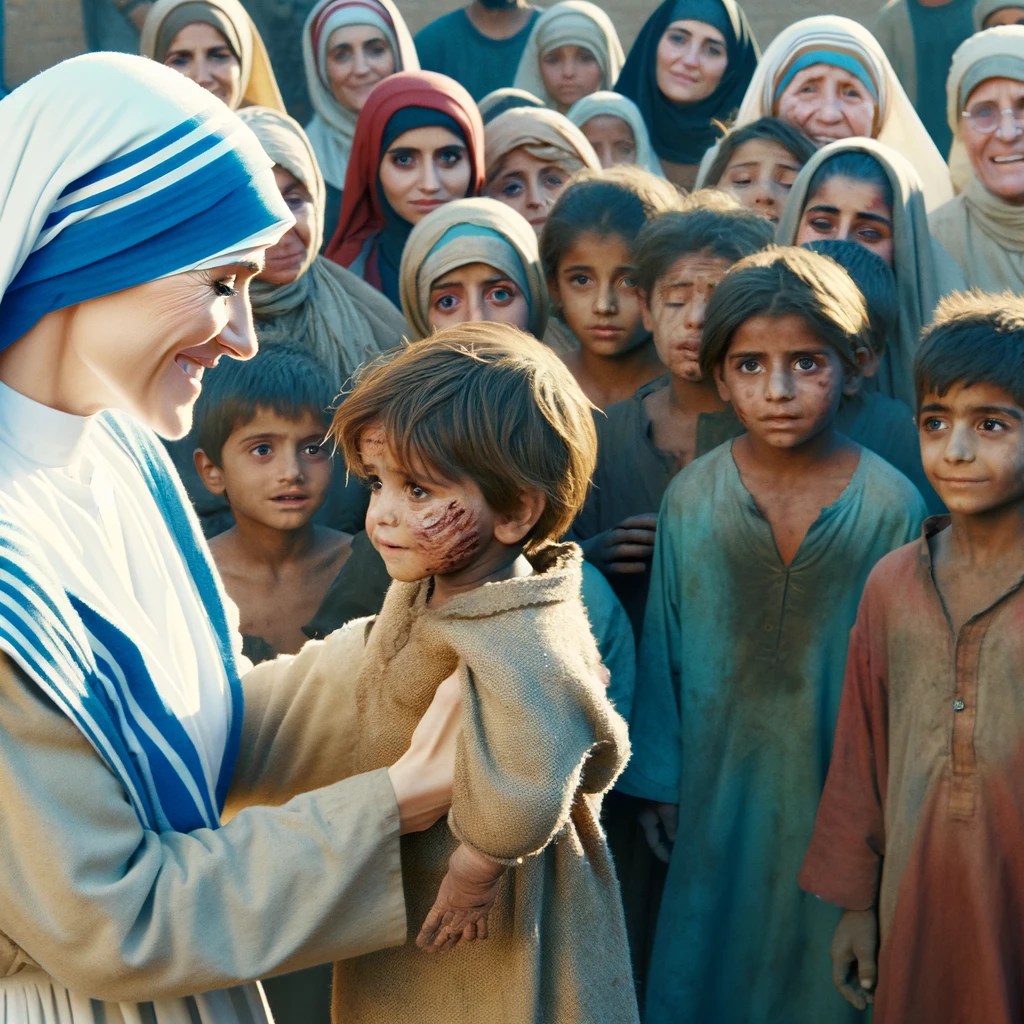
The grainy black and white documentary showed a severely facially deformed 9-ish-year-old orphan boy coming to the mission. He was hard to look at. They cleaned him up and introduced him to the other children in a gathering in Calcutta that was much like the one we were in so many miles away. Except we were sitting and those children were standing.
St./Mother Teresa and the other mothers and nuns asked the children if the ugly child could stay, or whether he should be sent away. She told them it was entirely up to them as a group to decide. I remember thinking, WTF? Why on God’s green, brown and blue Earth would she give those children the choice to reject this child in need?
The children spoke among themselves and ultimately accepted the boy. If I recall correctly, one designated boy stepped up and gave the decision, then embraced their new brother.
I understand now. By giving them the option, knowing full well they would ultimately do the right thing and take him in, the religious leaders made it the children’s decision, versus having the hard-to-look-at child forced upon them — which could build resentment.
I pray his life took a turn for the better after that. How could it not? (I should actually never ask that, should I?)
I suppose I’ll always root for the underdogs and be the first to let them free if the occasion allows it. Just as long as they don’t turn back and follow me. They need to fly and find their own path. Plus it wouldn’t make sense, since I’m often just as lost as they have been.
Yes, yes, yes. Flies do serve a purpose, as we all do.
 At Least They're Committed
Leave a comment